
Medications: How They Work and Contraindications
Medications for Alcohol Use Disorder (AUD) work in different ways—some reduce cravings, some make drinking unpleasant, and others help stabilize brain chemistry. Here’s a clear breakdown of the main options, how they function, and key contraindications.
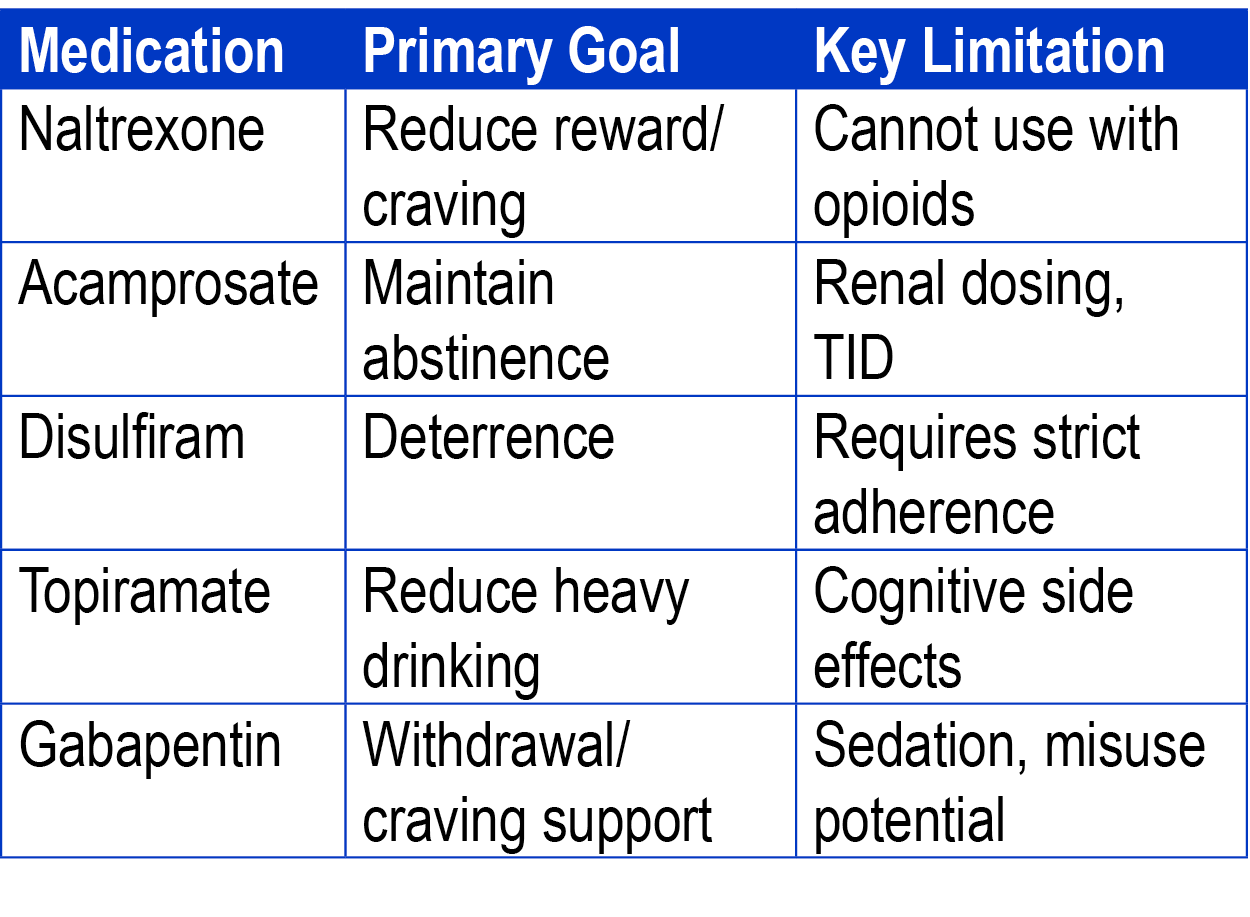
1. Naltrexone
How it works
Blocks opioid receptors involved in the brain’s reward system
Reduces the “high” and pleasure from alcohol → less urge to drink
Forms: oral (daily) or long-acting injection (monthly)
Contraindications/cautions
Current opioid use (can precipitate withdrawal)
Acute hepatitis or liver failure
Use cautiously in liver disease
Sources: SAMHSA – Naltrexone Overview | FDA – Vivitrol (Naltrexone) Information | SAMHSA – Medications for Substance Use Disorders
2. Acamprosate
How it works
Stabilizes glutamate and GABA balance disrupted by chronic alcohol use
Helps reduce post-acute withdrawal symptoms (anxiety, insomnia, cravings)
Best for maintaining abstinence
Contraindications/cautions
Severe kidney impairment (renal failure)
Requires dosing 3 times daily → adherence may be difficult
Sources: SAMHSA – Medication for the Treatment of Alcohol Use Disorder: A Brief Guide| SAMHSA Library – AUD Pocket Guide
3. Disulfiram
How it works
Blocks the breakdown of acetaldehyde when alcohol is consumed
Causes unpleasant reaction (flushing, nausea, palpitations) → deters drinking
Contraindications/cautions
Severe heart disease
Psychosis
Liver disease
Must avoid any alcohol exposure (including sauces, cough syrups, and some medications)
Sources:SAMHSA – Medication for the Treatment of Alcohol Use Disorder: A Brief Guide | SAMHSA Advisory – Prescribing Pharmacotherapies for AUD
4. Topiramate (off-label)
How it works
Enhances GABA activity and inhibits glutamate
Reduces cravings and heavy drinking
Contraindications/cautions
Cognitive side effects (“brain fog”)
Kidney stones
Teratogenic → avoid in pregnancy
Sources: SAMHSA Advisory – Prescribing Pharmacotherapies for AUD | SAMHSA – Medication for the Treatment of Alcohol Use Disorder: A Brief Guide
5. Gabapentin (off-label)
How it works
Modulates GABA activity
Helps with withdrawal symptoms, anxiety, insomnia, and cravings
Contraindications/cautions
Risk of sedation and misuse
Dose adjustment required in kidney disease
Sources: SAMHSA Advisory – Prescribing Pharmacotherapies for AUD | SAMHSA – Medication for the Treatment of Alcohol Use Disorder: A Brief Guide
Clinical Notes
First-line choices are usually Naltrexone or Acamprosate, depending on patient factors.
Disulfiram is most effective when adherence is supervised.
Off-label agents may help when first-line treatments fail or are not tolerated.
Medication is most effective when combined with behavioral therapy such as CBT or motivational interviewing.
General References: SAMHSA – Substance Use Disorder Treatment Options | SAMHSA – AUD Medication Guide | SAMHSA Library – TIP 49 Advisory